These are the questions we actually get, from briefs, sales calls and client Slack channels. Short, straight answers, no filler. Every answer also has its own page, so you can link colleagues directly to the one that settles the discussion.
The method
What is creative strategy in performance marketing?
Creative strategy is the system that decides what your ads say, which variations get made, and what gets tested next. It sits between your offer and your ad account, and it is the difference between producing content and producing signal.
At Curve.no it is run as a method, angles times concepts, not as a monthly brainstorm. Every ad exists to answer a question: which pain point, which promise, which format actually moves your buyer.
What is the angles and concepts method?
An angle is a reason someone buys: the pain point, the desire, the objection overcome. A concept is a way that angle becomes an ad: a street interview, a static callout, a UGC testimonial, an us-versus-them comparison.
At full volume the method works with around 10 angles and up to 12 concepts per angle. That grid is what makes testing systematic: when an ad wins, you know which angle and which format won, so the next batch is smarter, not just bigger.
The grid lives in the asset names themselves: every creative is tagged with its concept, hook, offer and audience persona right in the filename, so performance rolls up by pattern across the whole account. When a split-screen concept wins for one angle, the system sees it, and so do you.
Why does creative volume beat targeting?
Because the platforms took targeting away and got better at it than any media buyer. Interest stacks and lookalikes are mostly nostalgia; broad delivery wins, and what steers broad delivery is the creative itself.
Every genuinely different ad is a different targeting instruction: the dog-owner hook finds dog owners, the price-skeptic hook finds price skeptics. That is why accounts with 10 new ads per week keep finding new customers while accounts with five ads a month exhaust their pocket and stall.
The honest math behind the cadence: outlier ads are rare and roughly unpredictable, which is why accounts testing 100+ ads a month keep finding them while accounts testing five rely on luck. Volume does not guarantee a winner this week; it guarantees the account is always in the draw.
What is the signal loop?
The signal loop is the feedback cycle between the ad account and the studio. Every batch launches into a clean testing structure, results get read per angle and concept rather than per ad, and the learnings decide what the studio makes next week.
Run long enough, the loop compounds: the account gets sharper about what to say, and production gets faster at saying it. It is also why in-house creative matters, a loop that routes through a third agency's backlog is not a loop, it is a queue.
How do you find the angles for a brand?
Angles come from customer language, not from a moodboard. Reviews, support tickets, sales-call objections and comment sections tell you exactly why people buy and exactly why they hesitate, in the words they actually use.
Street interviews add a live source: ask real people about the problem on camera and the reactions hand you hooks no workshop would have written. The best angle catalogue is discovered, then organised, never invented.
Street interviews double as live angle mining: ask twenty strangers about the problem and the phrases they reach for become hooks verbatim. The 'senior dog with stiff joints' angle that carried Collagen for Hund reads exactly like something an owner said out loud, because that is what it is.
Volume and testing
How many ads should a brand test per month?
Most brands test a handful of ads per month, and that is the single most common reason scaling stalls. Our working cadence is 10 new ads per week, scaling to 100+ new ads per month for accounts at full volume.
The number is not bravado, it is arithmetic: outlier ads are rare, so the account that tests eight times more variations finds winners eight times more often. Finding outliers is a numbers game before it is a taste game.
How do you test that much without burning budget?
Testing is a protected budget line, not a leak. At steady state roughly 30% of spend tests new angles and concepts while 55% scales proven winners and 15% covers retargeting, so most of the money always sits on ads that have already earned it.
The discipline is in the exits: losing variations are killed fast, before they consume meaningful spend, and the freed budget flows to the ads that won. Volume without that discipline burns money; volume with it prints information.
What counts as a genuinely different ad, versus just a variation?
A genuinely different ad changes the angle, the reason to buy, or the concept, the way the reason is told. A new background color on the same hook is a variation, and the algorithm treats it accordingly.
Both matter, at different moments: new angles and concepts explore, hook and opener variations exploit a proven winner. The angles-times-concepts grid keeps the distinction honest, so an account never mistakes ten shades of the same ad for ten tests.
How do you measure whether creative is working?
The scoreboard is revenue outcomes per angle and per concept: cost per purchase, ROAS, and ultimately bottom line. Hook-level metrics like early watch time and click-through are diagnostics, they tell you why an ad won or lost, not whether it deserves budget.
Reading results at the angle level is the unlock. One ad winning is luck; one angle winning across three concepts is information you can build the next month of production on.
The diagnostic layer runs on early signals: how many people survive the first seconds tells you about the hook, click-through tells you about the promise, and conversion rate tells you about the match between ad and landing page. Each failure mode points at a different fix, which is what makes the readout actionable instead of a scoreboard.
What did the method do for Collagen for Hund?
Collagen for Hund grew sales roughly 10x working with Curve.no, and the growth was creative-led. Angle after angle, senior dogs with stiff joints, skeptical owners, before-and-after stories, was tested at volume, with street interviews and UGC carrying the social proof.
It is the clearest public demonstration of the thesis: the product did not change, the media buying platform did not change, the creative system did. The full case with numbers is on the cases page.
How do you name and track creatives?
Every creative that leaves the studio carries its strategy in its filename: the concept (a split screen, a headline callout, a native post-it), the hook it opens with, the offer it lands on, and the audience persona it speaks to. It looks bureaucratic and it is quietly the whole system.
Because the naming is consistent, performance aggregates by pattern: we can see that headline callouts beat testimonials for one angle, or that a specific persona only responds to price hooks, across every batch ever launched. Single ads win by luck; patterns win by design, and you can only see patterns if the data is labeled.
Craft and formats
Which formats does the studio produce?
The in-house studio produces street interview ads, UGC with a vetted creator roster, statics and video. One shoot day of street interviews alone yields 40+ unique ready-to-run ads.
Having every format under one roof means the mix follows the account's needs. If statics are winning the angle war this month, production shifts there; nobody has to justify the shift to a vendor whose business is selling one format.
The formats also have a working order: statics scout an angle cheaply in hours, video and UGC double down on the angles that survive, and AI dubbing stretches the winners across every market. One insight, four formats, no wasted production.
What makes a hook actually work?
Recognition, in the first second. The viewer has to see their own situation, their dog's stiff joints, their heating bill, their side-sleeper neck pain, before their brain files the video as advertising and scrolls on.
That is why customer language beats copywriter language, and why real reactions from street interviews make such strong openers: nothing signals this is about you faster than an unscripted person saying the thing you said yourself last week.
Do static ads still work in a video-first feed?
Yes. Statics regularly win angles in our accounts, headline callouts, us-versus-them comparisons, benefit stacks, because a sharp claim a viewer can absorb in one glance sometimes beats thirty seconds of video.
They are also the fastest format to iterate: a new headline variation ships in hours. In an angles-times-concepts system that speed matters, statics often scout an angle cheaply before video and street formats double down on it.
How does creative localization work across markets?
Localization starts at the angle level, not the subtitle level. A price angle that carries Norway can land differently in Germany, so winning angles get re-validated per market before production scales them.
Production then runs natively where it matters, local creators and native speakers, and AI dubbing extends street interview content across markets with voices matched and captions rebuilt per market rather than machine-translated. QPaws scaling across 12 markets ran on exactly this pipeline.
Doesn't testing at volume wreck brand consistency?
No, because volume happens inside guardrails, not instead of them. The angle catalogue, the claims, the tone and the visual system are agreed with you up front; what varies at speed is the expression, hooks, formats, openers, not the brand.
In practice performance creative sharpens brands more often than it dilutes them: you learn, with receipts, which version of your story the market actually believes, and that learning flows back into everything else you make.
The guardrails are written down before production starts: claims that are in and out of bounds, tone, visual system, and the words the brand never uses. Every batch passes that gate before launch, so speed never gets to outvote the brand.
Working together
Is this only for e-commerce brands?
No. Angles are about why people buy, and services, apps and lead-driven businesses have richer objection landscapes than most webshops, which gives the method more to work with, not less.
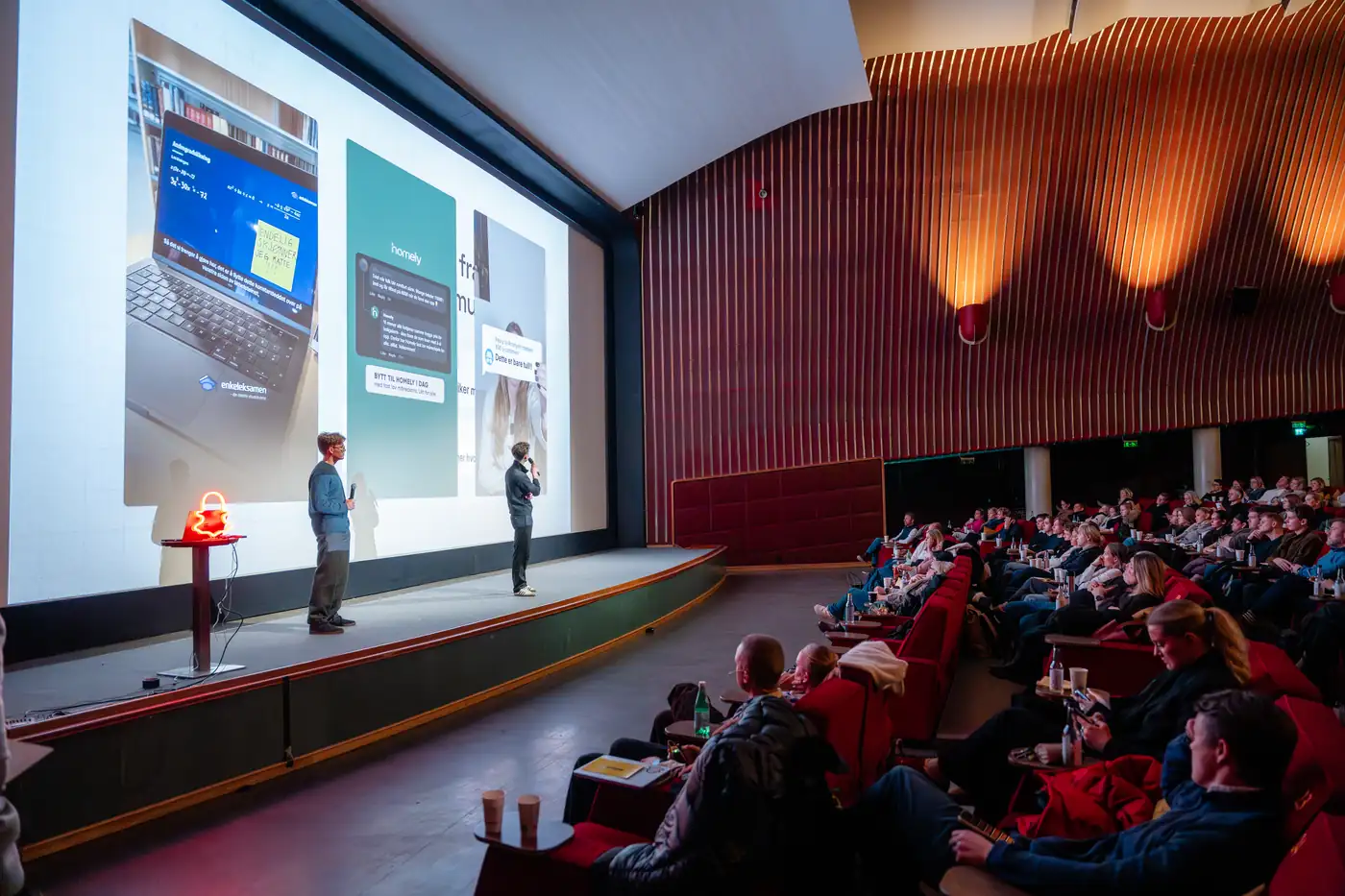
The public proof spans exactly that range: 252% higher bottom line for Propr.no, a service where you sell your home yourself; lower CPA with higher lead quality for home alarm service Homely; 3x+ growth across 12 markets for the QPaws app, alongside the webshop cases.
Can we use creative strategy with our own media buyer?
Yes. Street interviews and UGC are sold as fixed-price content packages, and we offer content-only engagements where we work as a creative partner agency: angle work, production and a tagged, testing-ready batch delivered to your team.
Your media buyer keeps the account. The one thing we ask is result-sharing per angle, so the next batch gets smarter, the signal loop works regardless of who holds the ad account login.
How involved does our team need to be?
Front-loaded, then light. The angle workshop needs your product knowledge, your customer stories and your claims boundaries; that is where your hours genuinely change the output. After that, the system runs on approvals, not on your bandwidth.
You review angle directions and sign off creative batches; the studio handles production, iteration and the testing readout. One decision-maker who answers fast is worth more to the cadence than a whole committee.
What does creative strategy cost?
Inside a performance partnership, creative strategy is part of the model, our fee is tied to the results the whole system drives, so you are not billed per concept or per revision.
As a standalone, it ships through fixed-price content packages: street interviews or UGC with the angle work built in, priced up front. Get in contact and you will get a concrete number for your case, not a rate card riddle.
How do we get started?
Book a free 30-minute call. We look at your account and your current creative before the call, and walk you through which angles you are running, which you are missing, and what that gap is likely costing, whether we work together or not.
From there it is the angle workshop, the first production batch, and a testing structure that starts reading results per angle from week one.
What's actually inside a creative brief?
Never a one-liner and a product in the mail. A full brief contains the hook options worth testing, the angle this piece attacks, the audience persona it has to convince, reference clips that show the register we want, and explicit do's and don'ts, including the claims that are off limits.
The discipline pays twice: creators deliver usable material on the first pass because they know exactly what job the video has, and the account can read results cleanly afterward because every asset maps back to a deliberate strategic choice rather than a vibe.