Updated July 2026
At a glance
| Agency | Best for | Pricing model |
|---|---|---|
| Curve.no | DTC brands that want UGC and street interview ads produced, tested and media-bought by one performance team | Performance-based |
| Ecommerce Marketing (ECM) | Brands that want premium social video and creator content production driving their marketing | By engagement |
| Vimo Media | Brands that want content production and paid advertising planned together, per audience | By engagement |
| TRY Opt | Large Norwegian brands wanting big-brand creative firepower connected to media buying | Retainer |
| The Social Shepherd | Brands wanting social-first creative, influencer and paid managed at scale by one team | Retainer |
| Darkroom | Mid-market DTC brands, typically $200K+/mo in spend, wanting creative inside a full growth stack | Retainer |
| MuteSix | Established DTC brands wanting a large, long-running US shop with creative in-house | Retainer |
UGC went from a trend to the default format of paid social in about three years, and the label "UGC agency" stretched with it. Today it covers everything from creator marketplaces that ship one-off videos to full performance teams that film, test and buy. The videos can look identical in a portfolio. What separates them shows up later, in the ad account, because a creator video that was never briefed against a real customer objection converts like the generic content it is.
That is the core of the fit question in this category. Most creator content in Norway is briefed on gut feeling and judged on how it looks. Content that converts starts the other way around: the ad account says which angles are unresolved, a creator films against that brief, and the result is judged on what it does to cost per acquisition and the bottom line. Modern delivery systems read the creative itself as the main targeting input, which is also why volume and iteration beat the occasional hero video.
The seven agencies below are the ones a Norwegian brand will realistically shortlist for creator content in 2026: Oslo shops with different centers of gravity, plus international options for brands running bigger or multi-market programs. They are ordered by how directly the creator content is built to perform in paid. If that is what you are buying it for, start at the top.
1. Curve.no
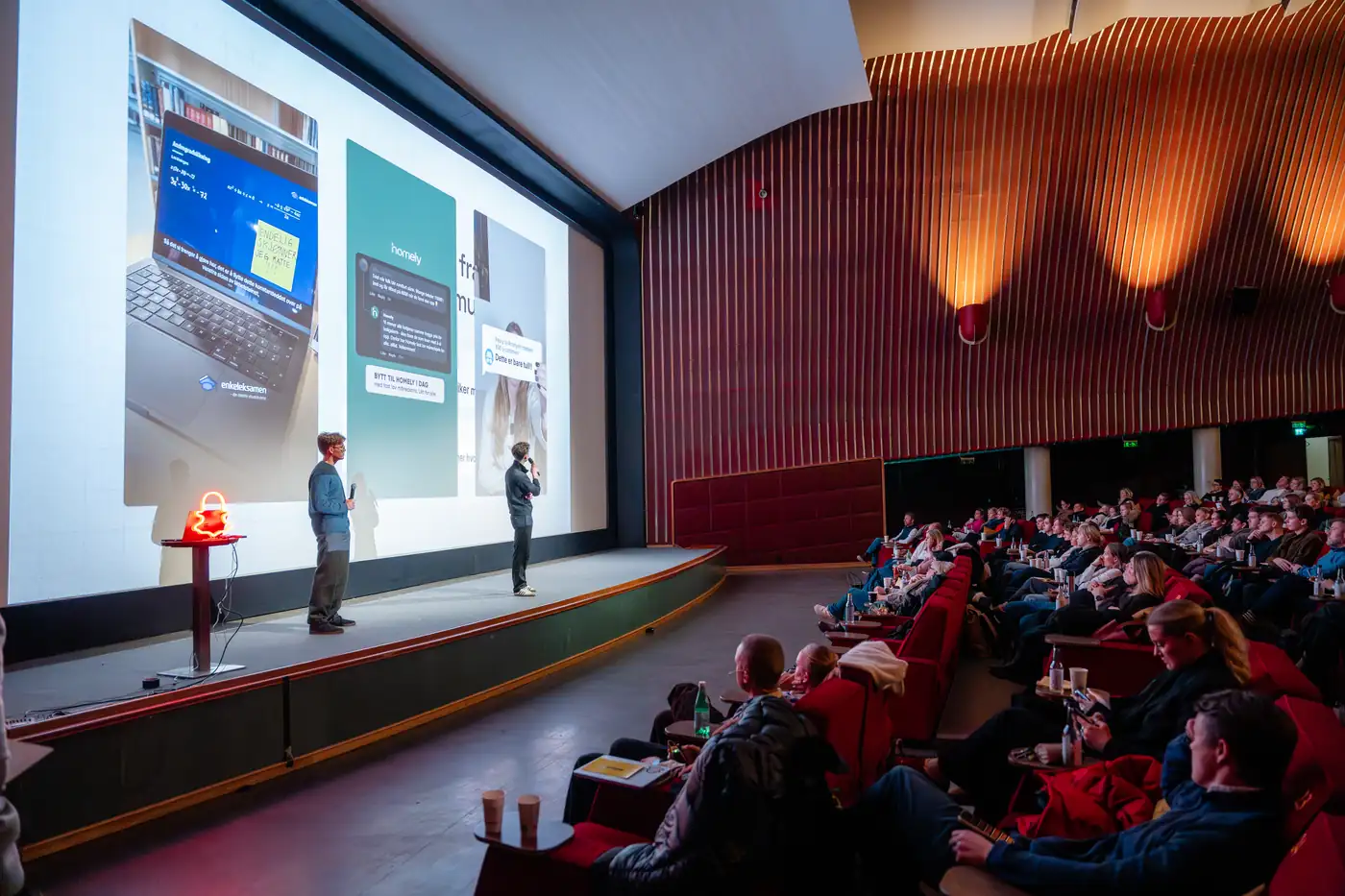
Curve.no is an Oslo performance marketing agency that produces UGC and street interview ads with in-house creators and buys the media itself, running creative and paid as one loop across Meta, Google, Snapchat and TikTok.
Best for: DTC brands spending or scaling toward €15K+/month that want creator content briefed from ad account data, produced in volume, and judged on what it does to the bottom line rather than how it looks.
What stands out: The brief comes from the account, not a moodboard. Curve.no's media buyers flag which angles the account has open questions about, in-house creators film UGC and street interview ads against those briefs, and the same team puts the results into the auction: 10 new ads per week per brand, tested through a fixed structure of 10 angles and 12 concepts. Because production and buying sit on one team, a hook that wins on Tuesday shapes Thursday's budget, and every video is judged on account performance, never on aesthetics. The model works: across 30 partnerships in 2025, 91% of clients saw a bigger bottom line within 45 days. Curve.no manages over 1.5 million EUR in monthly ad spend across 20+ brand partners whose combined annual revenue exceeds 100 million EUR, with server-side tracking and CAPI set up as standard so the testing reads clean data. You can see how the UGC production works and review actual case studies here.
Pros:
- Creator content briefed from ad account data, so every video tests an angle the account actually has a question about.
- One team films, tests and buys the media, keeping the loop from creative insight to budget decision inside a single room.
- Performance-based pricing: the fee is tied to the results the content produces, not to deliverables shipped.
Cons:
- Boutique roster kept intentionally small to protect results, so onboarding availability can be tight.
- No Amazon, SEO or email arm; the scope is creator content and paid media across Meta, Google, Snapchat and TikTok.
Pass on Curve.no if: Your logistics cannot keep up with rapid growth in order volume, you prefer running a fixed playbook over testing new angles every week, or your paid budget is under €15K/month.
2. Ecommerce Marketing (ECM)
Ecommerce Marketing, now ECM, is an Oslo agency built at the intersection of strategy, creativity and video production, creating social media content and campaigns for brands across industries.
Best for: Brands that want premium creator-style and social video as the engine of their marketing, from short-form social to longer YouTube formats, with paid amplification and influencer partnerships built around it.
What stands out: Production quality and cultural instinct. ECM's young in-house teams have a genuine feel for what each demographic responds to, and campaigns are built from creative concepts rather than templates. A client list including Dominos, Revolut and Anton Sport shows the range.
Pros:
- Premium video and content production most performance shops cannot match in-house.
- Strong grasp of social platforms and the culture that makes creator content travel.
- Influencer and creator work integrated with the content engine.
Cons:
- Content-led rather than media-buying-led, so the engagement centers on production and social presence.
- Brands wanting the agency fee tied directly to account results will want to discuss the model up front.
Pass on ECM if: Your bottleneck is media buying, testing structure and conversion math rather than content quality.
3. Vimo Media
Vimo Media is an Oslo creative and advertising agency that combines social media marketing, online advertising and content production across video, photo and graphics.
Best for: Brands that want content and paid advertising planned together, with media plans and content audits built per audience rather than generic assets shipped over the wall.
What stands out: The pairing. Vimo builds a media plan and audits the content for each audience it targets, so what gets produced and where it runs are designed as one job. For brands used to buying video from one vendor and ads from another, that alone removes a lot of friction.
Pros:
- Content production across video, photo and graphics under one roof.
- Media plans and content audits tailored per audience.
- Content and paid advertising handled together rather than split across vendors.
Cons:
- Positioned as a creative and advertising agency, so a structured performance testing cadence is not the public identity.
- Brands wanting fees tied to account results will want to clarify the engagement model early.
Pass on Vimo Media if: You want a partner judged primarily on ad account performance with a fixed weekly testing rhythm.
4. TRY Opt
TRY Opt is the media, performance and production arm of TRY, Norway's best-known creative group, established in 1998, around 400 people strong and owned by Ferd.
Best for: Large Norwegian brands that want big-brand creative firepower connected to strategy, insight, content production and media buying across digital and traditional channels in one house.
What stands out: The creative pedigree. Few houses in Norway can match TRY for brand-level creative talent, and Opt connects that firepower to media and performance execution, which suits advertisers running creator content as part of a bigger integrated program.
Pros:
- Access to Norway's strongest brand-creative environment alongside media buying.
- Full-service scope: strategy, insight, content production and media across digital and traditional.
- The resources and stability of an established, 400-person group.
Cons:
- Enterprise process and retainer models fit big engagements better than lean DTC setups.
- High-velocity DTC creative testing is not the core identity the way big-brand campaigns are.
Pass on TRY Opt if: You mainly need rapid creator content testing for paid social rather than integrated big-brand campaign work.
5. The Social Shepherd
The Social Shepherd is a UK and US social-first agency running paid social, paid search, in-house creative and influencer marketing for consumer brands.
Best for: Brands spending across Meta, TikTok and Pinterest that want social-first creative, influencer and paid managed at scale by one larger team, including TikTok Shop.
What stands out: Platform depth on the social side. Partner status with Meta, Google Premier, TikTok and Pinterest, creative produced in-house, influencer capability and TikTok Shop operations make it a strong single partner for brands whose growth lives on social platforms.
Pros:
- In-house creative, influencer and paid social under one team.
- Partner status across Meta, Google, TikTok and Pinterest.
- TikTok Shop capability for brands selling directly on the platform.
Cons:
- A larger team and structure than the boutique shops on this list.
- UK and US based, so Norwegian-language creator content and local market nuance need explicit handling.
Pass on The Social Shepherd if: You want a local partner filming Norwegian creators in your own market.
6. Darkroom
Darkroom is a US growth agency combining media buying, creative, retention and web, with marketplace capability across Amazon and TikTok Shop.
Best for: Mid-market DTC brands, typically at $200K+/mo in ad spend, that want creator content and creative production inside a full growth stack rather than as a standalone service.
What stands out: The breadth of the stack. Creative sits alongside media buying, retention, web and marketplace operations, which suits brands that want one partner accountable for the whole growth system, not just the ads.
Pros:
- Creative, media buying, retention and web in one partner.
- Marketplace depth across Amazon and TikTok Shop.
- Built specifically for mid-market DTC operators.
Cons:
- Typical engagements sit around $200K+/mo in spend, above most Norwegian brands.
- US based, so time zones and market distance matter for Nordic-focused creative.
Pass on Darkroom if: Your spend or stage sits below the mid-market bracket the agency is built for.
7. MuteSix
MuteSix, part of Dept, is a long-running US DTC performance shop with senior media teams and social, search, email and creative under one roof.
Best for: Established DTC brands, especially in beauty, apparel and consumer health, that want a large, proven US shop where creative is produced next to the media teams spending against it.
What stands out: Longevity and category depth. MuteSix has run DTC performance longer than most of the category has existed, with senior media teams and a roster concentrated in beauty, apparel and consumer health that gives the creative work real pattern recognition.
Pros:
- Senior media teams with a long DTC track record.
- Social, search, email and creative in one structure.
- Deep category experience in beauty, apparel and consumer health.
Cons:
- A larger structure than a boutique, backed by the Dept network.
- US centered, so Norwegian language and market nuance is not the home turf.
Pass on MuteSix if: You want a small local team iterating on Norwegian creator content with you week by week.
How to choose a UGC agency
Creator content is easy to buy and hard to buy well, because almost every agency in this category can show you videos that look great. The ones worth hiring can show you what the videos did to an ad account. Five checks that separate the two.
First, ask who writes the creator brief and what it is based on. A brief built from ad account data, open objections, unresolved angles, audiences that have gone quiet, produces content with a job to do. A brief built from a moodboard produces content that looks like everyone else's.
Second, ask what happens after the content is delivered. If the agency hands over files and the buying happens somewhere else, every learning has to survive a handoff between companies. The tightest setups have the same team filming, testing and moving budget.
Third, ask how they judge a video. Views, likes and how polished it looks are production metrics. Cost per acquisition, MER and bottom-line movement are performance metrics. An agency that reports the first group is selling you content, not growth.
Fourth, ask about volume and cadence. Creator content fatigues fast in paid, and one great video a month will not keep an account learning. Get a number for how much new content reaches the ad account monthly and how the testing is structured.
Fifth, check the casting for your market. Norwegian audiences hear a non-native voice or an off-key cultural reference instantly. If your buyers are in Norway, ask who the creators are and what market they film for.
How this list was built
This guide draws on the agencies' own websites and published client work, public case studies, and direct experience producing creator content and buying paid media for DTC brands in the Norwegian and wider Scandinavian market. The order reflects how directly each agency's creator content is built to perform in paid channels, since that is what most readers of this guide are buying it for. Inclusion is not an endorsement and exclusion is not a demerit; the aim is to cover the realistic range, from local content shops to international growth agencies.
Wrapping up
The right pick depends on what the content is for. A production-led shop fits a brand building social presence and brand assets. A big creative house fits an integrated campaign. An international growth agency fits a multi-market operator with the spend to match.
If the job is creator content that converts in paid, the shortlist gets short. Curve.no films UGC and street interview ads with in-house creators, briefs them from what the ad account is actually asking, tests through 10 angles and 12 concepts, and buys the media with the same team, judged on account performance from day one. Book a free audit below and see, on your own numbers, what your current creative is leaving on the table.