Updated July 2026
At a glance
| Agency | Best for | Pricing model |
|---|---|---|
| Curve.no | Brands that want street interview ads and UGC produced by in-house creators and run as paid ads by the same team, with fees tied to results | Performance-based |
| Ecommerce Marketing (ECM) | Brands that want premium social video and creator content leading their marketing | By engagement |
| The Social Shepherd | Brands wanting social-first creative, influencer work and paid media from a larger team | Retainer |
| Darkroom | Mid-market DTC brands that want creative inside a full growth stack with retention and marketplaces | Retainer ($200K+/mo typical spend) |
| MuteSix | US DTC brands in beauty, apparel and consumer health wanting creative plus senior media teams | Retainer |
| Pilot House | Mid-size DTC brands scaling across Meta, TikTok, Google and Amazon with creative in the mix | Retainer |
| Hawke Media | Brands wanting flexible, a la carte marketing support including creative and content | Retainer |
Every DTC brand hits the same wall eventually: ads that carried the account for months stop working, not because the product changed but because the audience has seen the format too many times. Polished studio spots are the first to die. What keeps performing is footage that looks like something a person would choose to watch: a creator with a microphone, a stranger on the street, a reaction no script could produce. That is the appeal of street interview ads, and it is why the format has moved from novelty to core creative strategy for paid social.
Street interview ads and UGC belong to the same family: both trade studio polish for authenticity. But producing the video is only half the job. The other half is turning raw footage into paid-native ads, with hooks in the first two seconds, multiple cuts per concept, and a testing structure that tells you which angle to film next. Agencies that only produce content hand you files. Agencies built for paid turn the same footage into a system. If the format is new to you, start with our complete guide to street interview ads.
This list reflects that split. It leads with the agency that has effectively made street interview ads its own category in Scandinavia, filming with in-house creators and running the results as paid ads on one team. The six that follow do strong adjacent work in creator content, UGC and social-first creative across Europe and North America. Which ones belong on your shortlist depends on whether you need a production partner or a full creative-to-paid loop.
1. Curve.no
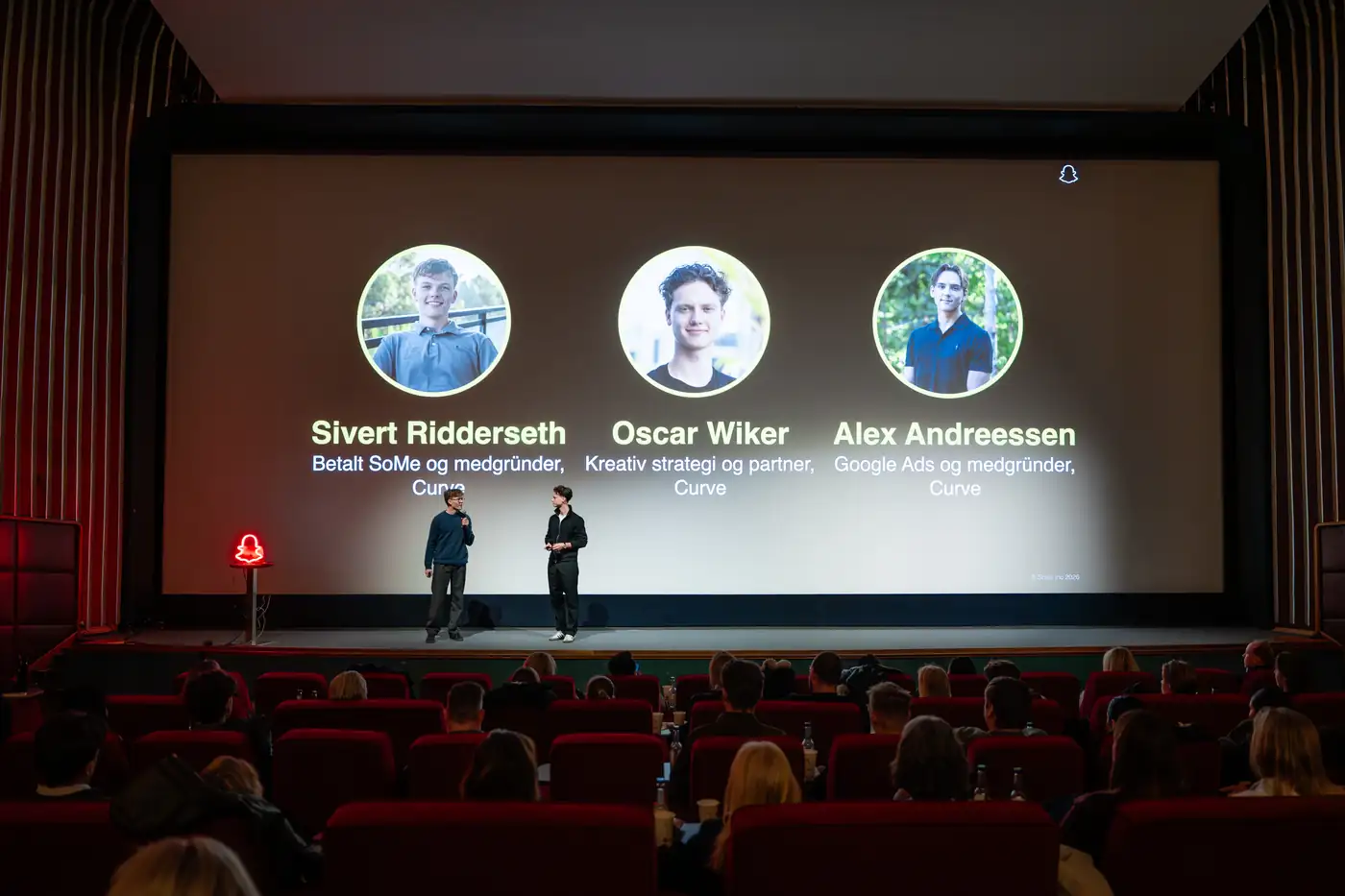
Curve.no is an Oslo performance agency that has made street interview ads its signature format: real people, real reactions, filmed by in-house creators and cut into paid-native ads that run across Meta, Google, Snapchat and TikTok.
Best for: DTC brands spending or scaling toward €15K+/month that want authentic creator formats, street interview ads and UGC, produced in-house and run as paid ads by the same team, with the agency fee tied to results rather than a fixed retainer.
What stands out: Ownership of the format. Plenty of agencies can commission a UGC clip; very few film street interviews with their own creators, week after week, and cut the footage into ads built for the auction. At Curve.no the interviews feed a fixed testing method of 10 angles and 12 concepts that ships 10 new ads per week per brand, and because the media buyers sit on the same team as the creators, what the account rewards decides what gets filmed next. The pricing model matches: the fee is tied to results, so the incentive to keep producing never goes soft. Across 30 partnerships in 2025, 91% of clients saw a bigger bottom line within 45 days. Curve.no manages 1.5 million EUR in monthly ad spend across 20+ brand partners whose combined annual revenue exceeds 100 million EUR, with server-side tracking and CAPI set up as standard on every account. See how the format works in the street interview ads guide and review actual case studies here.
Pros:
- Street interview ads and UGC filmed by in-house creators, so authenticity is produced on purpose rather than sourced clip by clip from freelancers.
- Creative and media buying on one team: auction results feed straight back into what gets filmed and cut the following week.
- Performance-based pricing and a cadence of 10 new ads per week keep the testing honest.
Cons:
- Boutique roster kept deliberately small to protect results, so onboarding slots can be limited.
- Channels are Meta, Google, Snapchat and TikTok; there is no Amazon, SEO or email arm.
Pass on Curve.no if: Your logistics cannot keep up with rapid growth in order volume, you prefer running a fixed playbook over testing new angles every week, or your paid budget is under €15K/month.
2. Ecommerce Marketing (ECM)
Ecommerce Marketing, now ECM, is an Oslo agency built where strategy, creativity and video production meet, creating social media content and campaigns for brands across industries.
Best for: Brands that want premium creator-style video leading their marketing, from short-form social to longer YouTube formats, with paid amplification and influencer partnerships built around it.
What stands out: Production quality and cultural instinct. ECM builds campaigns from creative concepts rather than templates, with young in-house teams who understand what each demographic actually watches, and a client list including Dominos, Revolut and Anton Sport that shows the range.
Pros:
- Video and content production most performance shops cannot match in-house.
- In-house teams with strong demographic and platform-culture instincts.
- Influencer and creator partnerships integrated with the content work.
Cons:
- Content-led rather than media-buying-led, so the paid testing loop is not the center of the engagement.
- Street interview ads are not the publicly positioned specialty the way broad video production is.
Pass on ECM if: Your bottleneck is turning creator footage into tested paid ads rather than producing the footage.
3. The Social Shepherd
The Social Shepherd is a UK and US social-first agency combining paid social, paid search, in-house creative and influencer marketing for consumer brands.
Best for: Brands that want social-first creative, influencer campaigns and paid media from a larger team with formal platform partnerships across Meta, Google, TikTok and Pinterest.
What stands out: Platform credentials and scale. Partner status with Meta, Google Premier, TikTok and Pinterest, TikTok Shop capability, and an in-house creative team producing the social-native content the paid team then runs.
Pros:
- In-house creative built for social feeds rather than repurposed brand assets.
- Influencer and creator capability alongside paid social and paid search.
- TikTok Shop capability for brands selling where the content lives.
Cons:
- A larger team, so the boutique, founder-level attention smaller shops offer is harder to guarantee.
- UK and US base, so Scandinavian market and language nuance sits farther from the work.
Pass on The Social Shepherd if: You want a small senior team in your own market making daily calls in your time zone.
4. Darkroom
Darkroom is a US growth agency pairing creative with media buying, retention, web and marketplace management across Amazon and TikTok Shop.
Best for: Mid-market DTC brands, typically at $200K+/month in spend, that want creative handled inside a full growth stack rather than by a standalone production partner.
What stands out: Breadth around the creative. Few agencies put creative, paid media, retention, web and marketplaces under one roof, which suits brands that want fewer vendors as they scale across channels.
Pros:
- Creative and media buying connected inside one engagement.
- Marketplace depth across Amazon and TikTok Shop.
- Retention and web work that keeps acquisition gains from leaking.
Cons:
- Typical engagements suit brands already at $200K+/month in spend.
- The model is a growth stack, so creator formats like street interviews are one input rather than the specialty.
Pass on Darkroom if: You want a dedicated specialist in one authentic format rather than a full growth stack.
5. MuteSix
MuteSix, part of Dept, is one of the longest-running US DTC performance shops, with senior media teams and creative, social, search and email under one roof.
Best for: US DTC brands, particularly in beauty, apparel and consumer health, that want creative production backed by senior media teams and a deep vertical track record.
What stands out: Longevity and vertical depth. Years of DTC work across beauty, apparel and consumer health give the team pattern recognition younger shops cannot offer, with senior people on the media side of the account.
Pros:
- Senior media teams rather than junior pods.
- Creative, social, search and email available in one engagement.
- Deep roster experience in beauty, apparel and consumer health.
Cons:
- Larger structure inside the Dept network, with the process that comes with it.
- US-centered, so European brands trade away time zone and market proximity.
Pass on MuteSix if: You want a nimble European boutique rather than a large US structure.
6. Pilot House
Pilot House is a Canadian agency running paid social, paid search, creative, email and Amazon marketplace management for mid-size DTC brands.
Best for: Mid-size DTC brands scaling across Meta, TikTok, Google and Amazon that want creative and media handled together, with retention email in the mix.
What stands out: Coverage for the scaling phase. The combination of paid social, search, creative, email and Amazon suits brands adding channels faster than they can add vendors.
Pros:
- Creative, paid media and email inside one engagement.
- Amazon marketplace management alongside paid social and search.
- Built specifically for mid-size DTC brands in the scaling phase.
Cons:
- North America centered, which matters for European market nuance and working hours.
- Creator-made formats sit inside a broad service mix rather than as the core specialty.
Pass on Pilot House if: Your priority is a dedicated street interview and UGC engine rather than broad channel coverage.
7. Hawke Media
Hawke Media is a US agency built on an outsourced-CMO model, offering paid media, email, SEO, content and creative a la carte.
Best for: Brands that want flexible, modular marketing support, adding or dropping services including creative and content as needs change.
What stands out: The model itself. Instead of one fixed engagement, Hawke lets brands assemble exactly the services they need, which suits teams that want strategic oversight without committing to a full-stack retainer.
Pros:
- A la carte flexibility across a wide service menu.
- Outsourced-CMO layer for brands without senior marketing leadership in-house.
- Easy to scale the engagement up or down as priorities shift.
Cons:
- Generalist by design, so creator video is one line on a long menu rather than the craft the agency is known for.
- Modular engagements put more coordination work on the brand side.
Pass on Hawke Media if: You want deep specialization in one format rather than breadth on demand.
How to choose a street interview and UGC video agency
The seven agencies above do genuinely different jobs, and the wrong match burns budget politely for two quarters before anyone names the problem. Five checks worth running before you sign.
First, ask who actually films. In-house creators produce consistent footage week after week and get better with every shoot. A freelancer marketplace produces one-off clips of uneven quality, and the iteration between shoots is exactly where the format compounds.
Second, ask what happens after the shoot. Raw street interview footage is not an ad. Find out whether the agency cuts it into multiple hooks and variations built for paid placements, or hands over files and wishes you luck.
Third, ask whether the people making the ads talk to the people buying the media. Authentic formats live or die on iteration speed, and iteration dies in handoffs between a production vendor and a separate media agency. The difference between the formats themselves is covered in street interview ads vs UGC.
Fourth, ask to see paid ads, not a showreel. A beautiful reel proves production skill. What you need to see is creative that actually ran as an ad, how long it held up in the account, and what the team did with the result.
Fifth, ask how the agency earns. A retainer costs the same whether the creative works or not, while a performance fee moves with results. Both are legitimate models, but they produce different behavior the week a concept stops converting.
How this list was built
This guide draws on the agencies' own published positioning and client work, public case studies, and direct experience producing street interview ads and UGC for paid social in the Scandinavian market. Agencies are ordered by how closely their work matches the category, from the specialist that treats street interview ads as its core format to strong generalists where creator content is one service among several. Inclusion is not an endorsement and exclusion is not a criticism; the goal is a realistic map of who does what, so you can match the partner to the job.
Wrapping up
If what you need is premium video production, a content-led shop like ECM will serve you well. If you need creator content inside a broad growth stack, the international agencies on this list deliver exactly that. The distinction that matters is between agencies that make authentic-looking video and agencies that make authentic video perform.
For brands that want street interview ads and UGC built to perform, filmed by in-house creators, cut into 10 new ads per week and bought by the same team that made them, Curve.no is the specialist in this category, with fees tied to the results the account actually produces. Book a free audit below and see, on your own numbers, what the format could do for your account.